
An MDR1-affected dog can still follow a normal yearly prevention schedule. What changes is the product list, not the schedule: vaccination, dental care and parasite testing all continue, but each item is chosen around the drugs your dog cannot safely take. The work is done once with your veterinarian, written down, and then reused at every visit.
Start with the medication list, not the calendar
Most yearly prevention plans are built backwards. The clinic books a date, the owner arrives, and the products are chosen in the room. For an MDR1-affected dog it works better the other way round.
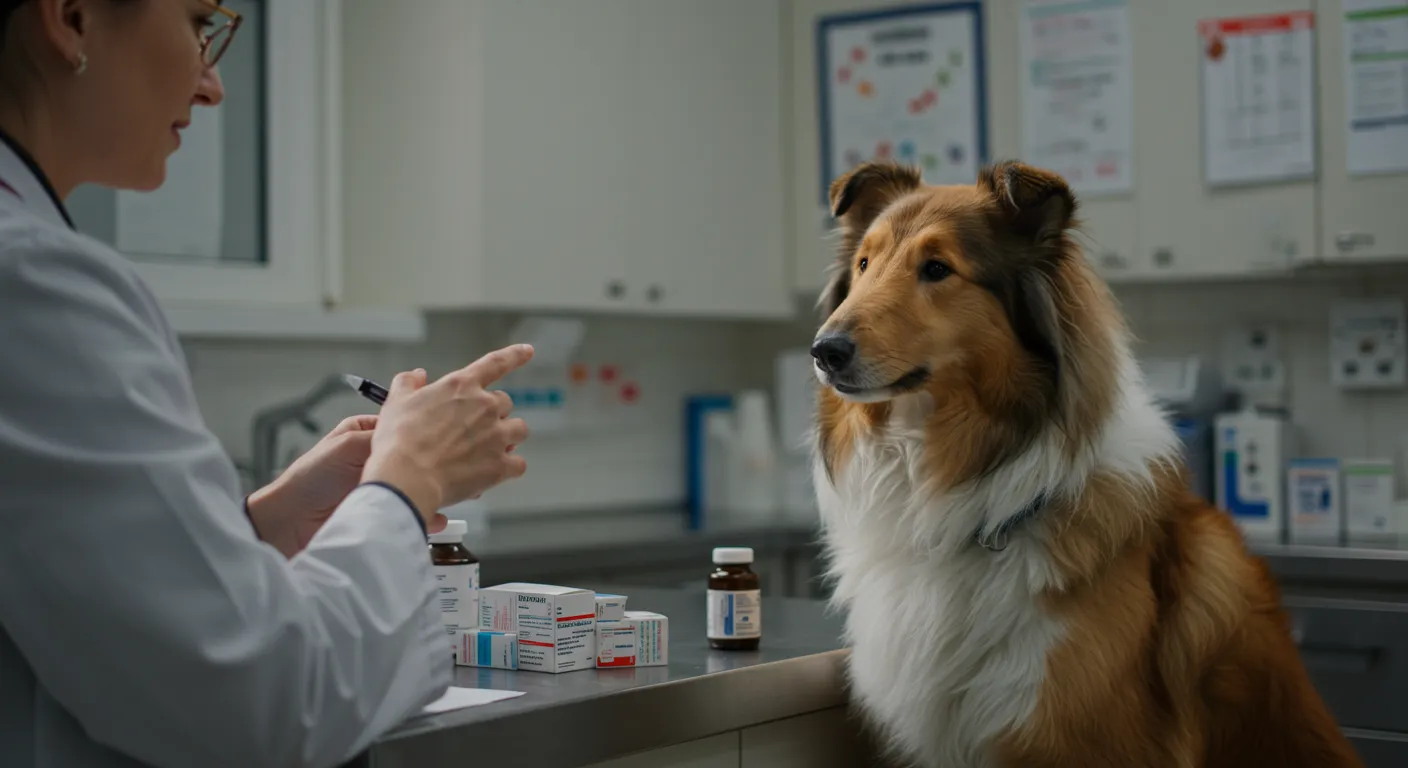
Ask your veterinarian for a written list of what is safe, what is unsafe, and what is uncertain for your dog. The MDR1 mutation affects the blood-brain barrier, so the drugs that matter most are the ones that act on the nervous system. That includes several common antiparasitics, some anti-nausea drugs, some sedatives and some chemotherapy agents. A dog with two copies of the mutation is generally treated more cautiously than a dog with one copy, and a dog with one copy more cautiously than a clear dog.
Once that list exists, the yearly plan is built only from products on the safe side. Anything uncertain is either avoided or used under direct veterinary supervision. Owners who keep this list on their phone, or in the folder with the vaccination record, spend far less time re-explaining the diagnosis at each visit.
Danish owners often ask how vaccination schedules are organised locally, and the same question comes up for cats. A Danish-language magazine for pet owners, vaccination hund kat danmark, covers vaccination, dental care and parasite prevention for dogs and cats in Denmark, and it describes clinics and authorities in the third person rather than selling anything. It is a useful starting point for understanding what a Danish consultation normally includes, though the actual decisions still belong to your own veterinarian.
Hvilke vaccinationer har en hund eller kat brug for i Danmark?
In Denmark, the core vaccines for dogs are distemper, parvovirus, infectious hepatitis and leptospirosis, with rabies added when an animal travels outside the country or when a passport requires it. Kennel cough is optional and depends on whether the dog meets other dogs in training, shows or boarding. For cats the core set is usually feline panleukopenia, feline herpesvirus and feline calicivirus, with feline leukaemia added for cats that go outdoors.
None of these vaccines is affected by the MDR1 mutation. A modified live vaccine is not a drug that the MDR1 protein pumps out of the brain, so the mutation does not change whether vaccination is safe. This is worth saying plainly, because some owners hear “no ivermectin” and assume all prevention is compromised. It is not.
The practical question is timing. If your dog is due for a vaccine and also needs a parasite test, your veterinarian may prefer to separate the two by a week or two so that any reaction can be attributed to one thing. That is a scheduling preference, not a rule, and it is worth asking about. If your dog has had a reaction to a vaccine before, say so at booking, because the clinic may adjust the plan.
Keep the vaccination record current and bring it to every visit. For travel within the EU, the rabies entry has to be legible and correctly dated, and a dog with an MDR1 diagnosis still needs the same documentation as any other dog.
Hvordan holder jeg min hunds eller kats tænder sunde?
Dental care is the part of yearly prevention that owners most often postpone, and it is also the part where MDR1 matters least. Brushing is mechanical: a soft toothbrush and pet-safe toothpaste, ideally daily, at minimum a few times a week. Toothpaste for humans is not used, because dogs swallow it and fluoride is not meant to be ingested.
Where the mutation does enter the picture is anaesthesia and pain relief. Dental scaling under anaesthesia is sometimes needed, and the pre-anaesthetic protocol has to avoid drugs that are risky for an MDR1-affected dog. That is a conversation to have before the appointment, not on the morning of the procedure. Ask which induction agent and which pain relief are planned, and confirm they are on the safe list.
Chews and dental diets help, but they are not a substitute for brushing, and some very hard chews fracture teeth. If your dog already has tartar, bleeding gums or bad breath, that is a sign to book a dental check rather than to add another chew. Cats hide dental pain well, so a cat that drops food, chews on one side or has become quieter at meals should be examined.
Hvad er hjerteorm og lungeorm, og skal min hund testes?
Heartworm is a parasite transmitted by mosquitoes. Adult worms live in the pulmonary arteries and the right side of the heart, and the infection can be serious before any sign is visible. Lungworm in dogs is usually Angiostrongylus vasorum, picked up from slugs, snails and contaminated water or grass. It causes coughing, exercise intolerance and sometimes bleeding problems. In Denmark, lungworm has become more common, and testing is often discussed for dogs that eat slugs or snails, or that live in areas where cases have been reported.
This is the area where the MDR1 list bites hardest. Several common preventive products for heartworm and lungworm belong to the drug classes that MDR1-affected dogs may not tolerate. That does not mean prevention is impossible. It means the product has to be chosen by a veterinarian who knows the genotype, and it often means using a different active ingredient, a different interval, or a test-and-treat approach instead of continuous monthly prevention.
Testing is usually a blood test, sometimes combined with a faecal test for lungworm larvae. A negative test does not always mean no worms, especially early in an infection, so your veterinarian may repeat it later. If your dog is on a preventive product, the timing of the test relative to the dose matters, and the clinic will advise on that.
Build the yearly plan in one appointment
A single longer appointment can cover most of the year. Bring the MDR1 genotype result, the current medication list, the vaccination record and any notes about past reactions. Ask the veterinarian to write the plan down: which vaccine, which parasite test, which preventive product if any, and which drugs to avoid in an emergency.
Then diarise it. Vaccination dates, dental check, parasite test, and a reminder to review the medication list once a year, because products and recommendations change. If your dog is ever treated by an emergency clinic that does not know the history, the written list is what protects them.
What to do if a mistake happens
If your dog receives a product that is on the unsafe list, contact a veterinarian immediately, even if the dog looks normal. Signs of neurological toxicity in MDR1-affected dogs include wobbling, dilated pupils, drooling, tremors, disorientation and, in severe cases, seizures or coma. These can appear within hours. Do not wait to see whether it gets worse.
Bring the packaging or the name and dose of the product with you. Most cases are manageable when treated early, and the outcome is far better than owners expect when they call straight away. After an incident, ask for the event to be noted in the record so it is not repeated.
Yearly prevention for an MDR1-affected dog is not a reduced plan. It is the same plan, with a shorter list of products and a veterinarian who knows why.