
A conformation weekend in Canada asks an MDR1-affected herding breed for the same things it asks of any dog: a clean coat, calm travel, and paperwork that matches the entry. The difference is that every product touching the skin, every sedative offered for the ride, and every drug named on a health form has to be checked against the MDR1 list first. The show itself is not the risk. The preparation around it is where families of collies, Australian shepherds, and other affected breeds get into trouble.
If you are new to the Canadian show circuit, the logistics side is worth reading before you enter: Canadian conformation shows are covered in plain language for owners who need to separate the official calendar from a club’s own premium list. That distinction matters for MDR1 families because entry deadlines and health requirements are set by the club putting on the show, not by a single national rulebook.
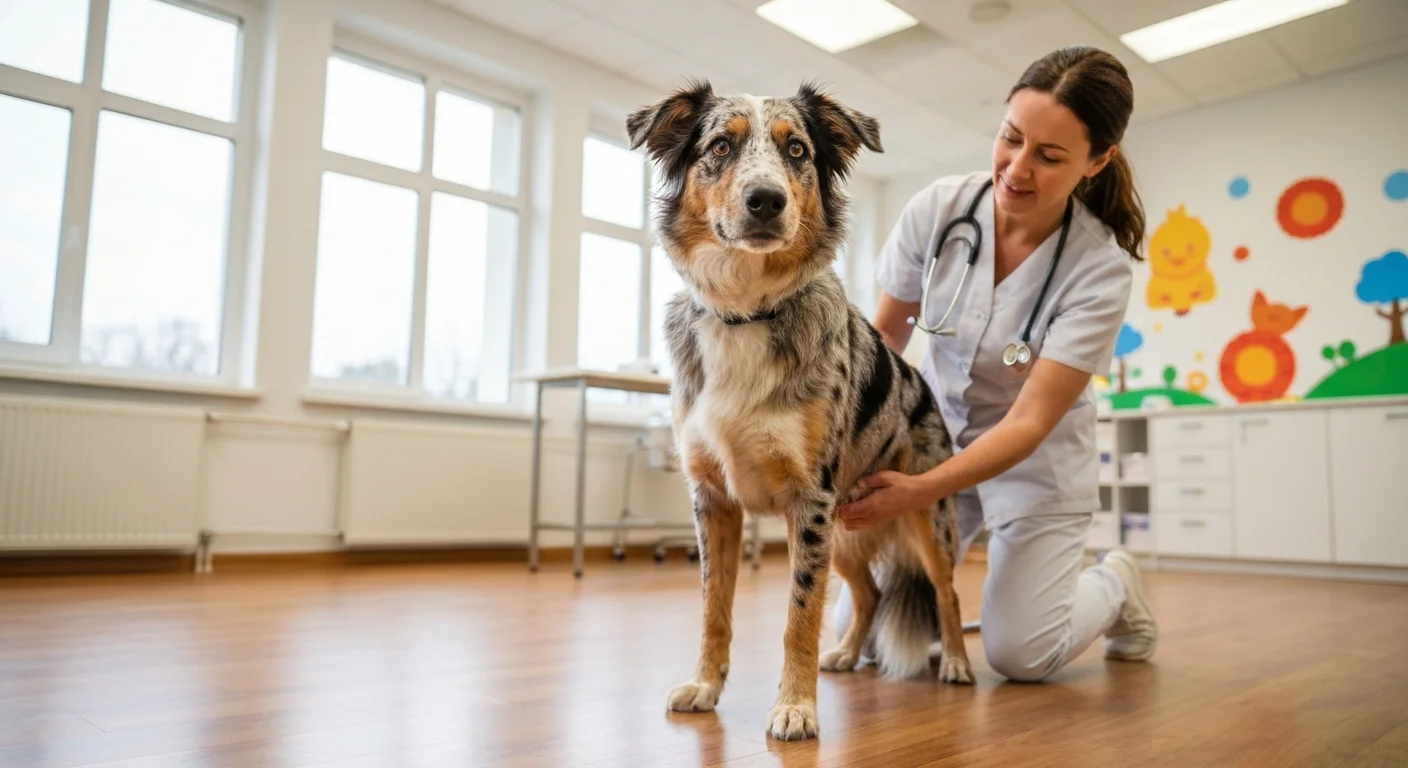
What does a conformation weekend actually require of the dog?
A show weekend is a sequence of small physical demands, not one big one. The dog stands for examination, gaits on a lead, and repeats that pattern several times across two or three days. Between rings, it waits in a crate or an exercise pen, often in a building with recycled air, unfamiliar flooring, and dozens of other dogs.
For an MDR1-affected dog, the practical load is this:
- Coat and skin contact with shampoos, conditioners, chalk, mousse, and finishing sprays.
- Travel in a vehicle, sometimes several hours each way, with a dog that may not travel well.
- Close contact with other dogs, which raises the chance of a minor injury, a hotspot, or an eye irritation that someone will want to treat on site.
- Paperwork: proof of registration, proof of vaccination where the club asks for it, and any health statement the entry form requires.
The dog does not need to be medicated to show. It needs to be healthy enough to stand and move comfortably, and that is a veterinary judgement, not a handler’s.
Grooming products: what goes on the coat
Grooming is the part of showing where MDR1 families most often get surprised, because the risk is not always a drug. It is absorption. A dog that licks its shoulder after a spray, or that lies down on a grooming table with product still damp on the skin, can ingest a small amount of whatever was applied.
Most coat products are topical and are not on the MDR1 problem list. The ones that deserve a second look are those containing insecticides, especially permethrin and similar pyrethroids, and any product labelled for flea or tick control rather than for show presentation. Spot-on flea treatments are the classic example: many are safe, some are not, and the difference is the active ingredient and the dose, not the brand.
A workable routine for a show weekend:
- Bathe at home, several days out, with a shampoo your dog has already used without reaction.
- Avoid introducing a new product the week of a show. If a coat dressing is new to the dog, test it at home first.
- Keep flea and tick prevention on its normal schedule, and confirm the product with your veterinarian rather than switching to whatever is sold at the venue.
- Bring your own towels and your own grooming tools. Shared tools are a hygiene question more than an MDR1 question, but they are still a question.
If a dog develops a skin reaction at the show, the correct move is to withdraw it from the ring and call your veterinarian. A judge is not going to diagnose a reaction, and a handler should not try to treat one with a product borrowed from another exhibitor.
Travel: the car, the crate, and the question of sedation
Travel is where MDR1 families face the most consequential decision of the weekend, because a dog that whines, drools, or panics in a vehicle is a dog whose owner will be offered a sedative by someone at the show.
Some sedatives and anti-nausea drugs are tolerated by MDR1-affected dogs. Others are not, and the ones that are not include drugs that are commonly used for travel and for minor procedures. Acepromazine, butorphanol, and several other agents appear on published MDR1 sensitivity lists. Ivermectin at high doses is the best known, but it is not the only one.
The rule that keeps dogs safe is simple and it is not negotiable: no sedative, no anti-nausea tablet, no pain reliever, and no injectable is given to an MDR1-affected dog without the prescribing veterinarian knowing the dog’s genotype. That includes anything handed over at a show grounds by a well-meaning exhibitor.
Practical travel notes:
- Crate the dog securely and stop every two to three hours on long drives.
- Bring water from home for the first day, then transition if you must.
- Keep the crate out of direct sun and never leave a dog in a parked vehicle in warm weather.
- If the dog genuinely cannot travel without chemical help, that is a conversation with your veterinarian weeks before the show, not the morning of.
What health paperwork may a club or a judge ask for?
A judge does not ask for health paperwork. A judge examines the dog in the ring and may excuse a dog that appears lame, ill, or aggressive. The paperwork belongs to the club and to the registering body.
What a club may require at entry or at check-in:
- Proof of registration with the recognized registry, so the dog is eligible to be shown.
- Proof of current rabies vaccination, where provincial or venue rules require it.
- A signed entry form confirming the dog is not a hazard and is eligible in the class entered.
- For some events, a veterinary certificate of health, particularly for dogs travelling from outside the province or country.
What a club generally does not require is an MDR1 test result. MDR1 status is not a condition of entry in conformation. It is a condition of safe veterinary care, which is why families should carry a copy of the test result with the dog’s other documents. If an emergency veterinarian has to treat the dog at a show, that piece of paper changes the drug list immediately.
Are there safer alternatives for a dog that needs help on show day?
Sometimes a dog needs something, and the honest answer is that the choice belongs to the veterinarian who knows the dog and the genotype. There is no universal substitute for a sedative, and no over-the-counter product should be treated as one.
What families can do instead is reduce the need for medication:
- Arrive the day before when the drive is long, so the dog is not asked to perform after six hours in a crate.
- Practise the ring routine at home and at a local fun match, so the show is not the first time the dog sees a mat and a table.
- Keep the weekend short. One day of showing is easier on a dog than three.
- Ask the veterinarian about non-drug options for travel anxiety, and accept that some of them are training, not chemistry.
If a dog is on a medication for a chronic condition, the show entry is a veterinary question. Some drugs are fine to continue through a weekend. Some are not, and some interact with the stress of travel. That is a conversation, not a guess.
The paperwork habit that pays off
Keep one folder, physical or digital, with the registration certificate, the vaccination record, the MDR1 test result, and a short note from your veterinarian listing the drugs your dog can and cannot receive. Bring it to every show. It takes five minutes to assemble and it is the single most useful thing an MDR1 family can carry.
A conformation weekend is a normal dog activity. An MDR1-affected herding breed can do it well. The work is in the preparation, and most of that work happens before the leash goes on.