
Shared premises are hard on dogs and on the people who run them. A clinic waiting room, a grooming table, a boarding kennel and a pet shop all see a rotating cast of animals, and the same practical routines keep those spaces usable: clean surfaces between dogs, move air through the room, and wash hands at every transition. None of this is about chasing a sterile environment. It is about lowering the load of what one dog leaves behind for the next one, especially when a herding breed with the MDR1 mutation is already on medication and less able to shrug off an ordinary bug.
If you run a shop or a small facility, the same starting point applies as in any other business setting: begin with the basics of store infection control, then adapt them to animals. That means a written routine, supplies within reach, and a staff member who owns the schedule.
What does infection control in a shared dog space actually start with?
Start with a short written routine, not with products. Pick the three or four touchpoints that every dog passes through: the entrance mat and door handle, the counter or check-in surface, the exam or grooming table, and the floor area where dogs wait. Those get cleaned on a fixed schedule, and the schedule is posted where staff can see it.
Use a detergent first, then a disinfectant that is labelled for the surface and safe around animals. Many clinic and kennel disinfectants need a contact time of several minutes to work; wiping and immediately drying defeats the purpose. Keep a dedicated cloth or mop head per zone so a dirty floor is not spread onto a table.
Ventilation matters as much as wiping. Dogs in a closed waiting room share air, and so do the people with them. Open windows where possible, run exhaust fans, and avoid blocking vents with crates or stock. If the room has no mechanical ventilation, a short airing between appointments does more than a stronger smell of cleaner.
Hand hygiene is the routine that gets skipped when the phone rings. Place alcohol rub at the door, at the counter and at the table, and treat every dog-to-dog transition as a hand-washing moment. Soap and water are needed after contact with saliva, urine or faeces; rub is fine for the rest.
How do you write a staff sick-day rule that people follow?
Write it before anyone is ill, and keep it short enough to remember. A workable rule has three parts: what counts as a reason to stay home, who to tell, and how the shift is covered.
What counts: fever, vomiting, diarrhoea, a new cough, or a skin lesion that is weeping or cannot be covered. For a dog-facing role, add a bite, scratch or ringworm concern, because those pass between staff and animals. Anyone with a fever stays off until they have been without one for a full day without medication.
Who to tell: one named person, with a phone number that is not the shop line. Staff should not have to decide alone at 6 a.m. whether they are fit to work.
How to cover: a written list of who can swap, and permission to run a reduced service rather than push a sick person onto the floor. Small teams cannot absorb an outbreak, so the rule protects the business as much as the person.
Keep the rule in the same place as the cleaning schedule, and review it once a year. If a staff member comes in ill because they fear losing pay, the rule has failed, and that is a management problem, not a discipline problem.
How should in-store notices be written so people read them?
Most notices fail because they say too much. A reader standing at a counter with a lead in one hand gives a sign two or three seconds.
Lead with the action, not the policy. “Please wait here until a staff member calls you” works better than a paragraph about appointment flow. Use one instruction per sign, in large type, at eye level, and in the languages your customers actually speak.
Say why, briefly, when the request is unusual. “For the safety of dogs already in the room, please keep your dog at the door until we call you” gives a reason a person can accept. Avoid blame and avoid medical claims; a notice is not a diagnosis.
For hygiene requests, make the action easy. A sign asking people to use hand rub works when the dispenser is directly under it. A sign asking owners to report coughing or diarrhoea before entry works when there is a simple way to say so, at booking or at the door.
Refresh signs when they fade or get covered by posters. A laminated sheet from two years ago is invisible.
Cleaning, ventilation and hand hygiene in practice
Break the day into moments rather than a single deep clean. Between dogs: wipe the table, change the towel, clean hands. Between sessions: mop the floor path, check the waiting area, restock rub. End of day: full clean of touchpoints, bins emptied, cloths laundered or discarded.
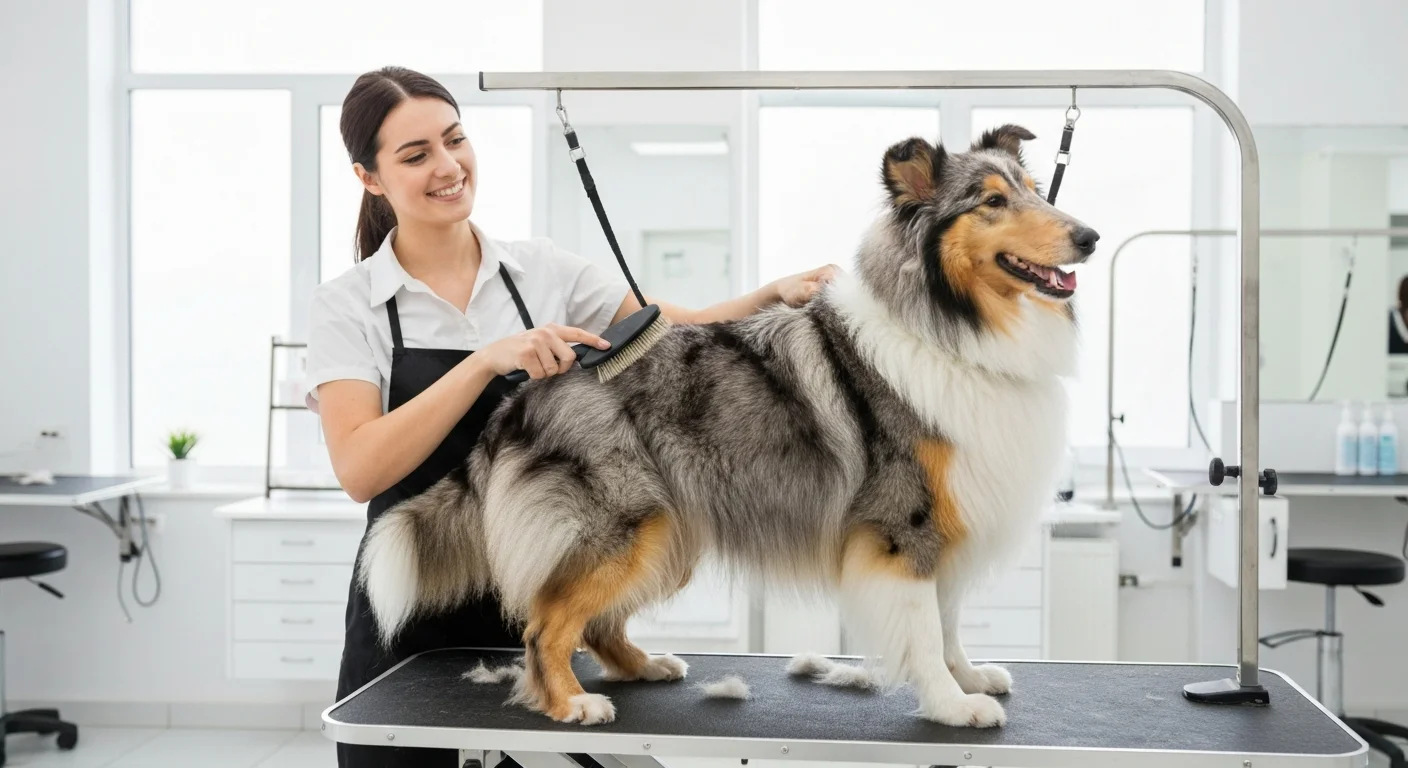
For boarding kennels, add a per-run routine: bowls and bedding are not shared between dogs unless laundered or disinfected first, and a new arrival is not walked through the same corridor at the same time as a dog going home. For groomers, blades, clippers and tables are the high-risk items; follow the manufacturer’s guidance for the equipment rather than a generic spray.
For pet shops, the shared spaces are the entrance, the till and any handling area. If dogs are allowed to meet at the counter, that is a shared space and it needs the same routine as a waiting room.
Ventilation is the quiet measure. A room that smells strongly of disinfectant is not necessarily clean; it may just be poorly aired. Aim for air movement across the room, not a sealed box with a diffuser.
What to do when a dog in your care looks unwell
Isolate first, clean second, and call the owner or the vet without delay. A dog with vomiting, diarrhoea, a cough or a new skin problem should not sit in a shared waiting area. Move it to a separate space or ask the owner to wait outside, then clean everything it touched.
For MDR1-affected dogs, this matters more than usual. Many of the drugs used for routine parasite control and for sedation are the ones that cause problems in these breeds, so a dog that is already unwell should not be given anything new without the veterinarian’s instruction. Keep the dog’s medication list with its records, and hand a copy to anyone who boards or grooms it.
Record what you saw and when. If two dogs from the same week develop the same signs, that pattern is worth reporting to the owners and to the vet, and it is the kind of thing a written routine makes visible.
Keeping the routine alive
A routine survives on supplies and on review. Check stock weekly: detergent, disinfectant, cloths, rub, gloves, waste bags. Check the schedule monthly against what actually happens, and change it when it does not fit the day.
Train new staff on the routine in their first week, and let them watch it being done. A written sheet is not training. If a step keeps getting missed, the step is probably in the wrong place in the day, not the wrong person.
Finally, keep the tone practical with owners. Most people accept a request to wait, to wash hands or to report a cough when it is asked plainly and once. The goal is not a spotless room. It is a room where the next dog, and the next family, can come in without picking up what the last one left.