
An Australian kelpie suits an active home, but only if the activity is daily and structured, not occasional. The breed was built to move stock over long distances and to think while doing it, so a household that offers real work, dog sports or long training sessions will get a settled dog, while a household that offers a backyard and good intentions will get a dog that invents its own job. Before you fall for a photo, read the whole profile with your dog’s drug list open beside it, because coat, size and temperament all shape what you can safely ask of the animal.
Read the profile with the drug list open
A breed profile tells you what the dog was selected to do. For herding breeds, that selection also narrowed the gene pool, and the MDR1 mutation is common in collies, Australian shepherds and several related working lines. The profile will not mention it. Your job is to hold two documents at once: the breed description and the list of drugs your veterinarian has flagged as risky for a dog with the mutation.
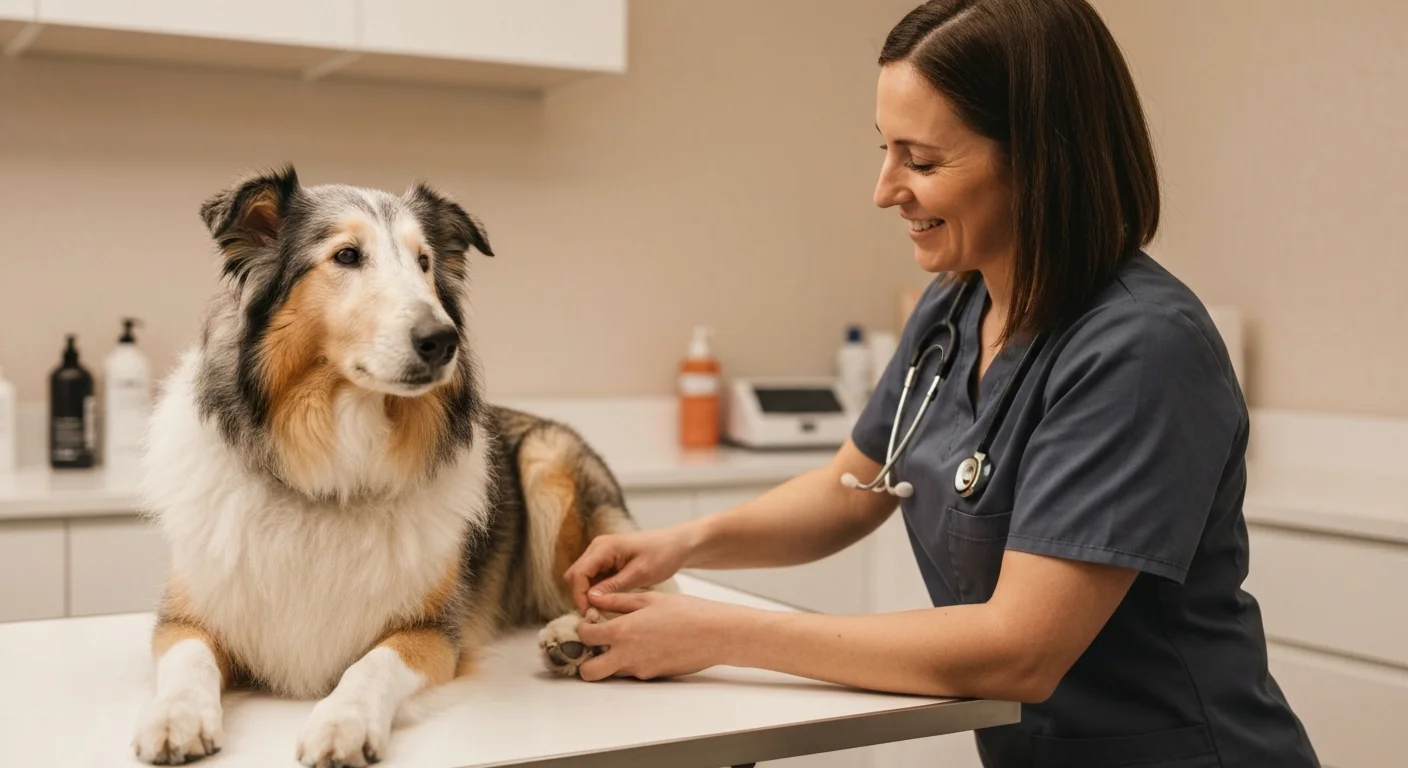
This matters because the practical advice in a profile, such as “this dog needs to run” or “this dog is prone to skin trouble”, leads directly to decisions about exercise, grooming and medication. A dog that needs daily running may also need a painkiller one day. A dog with a dense double coat may need sedation for a thorough clip. Each of those moments is a moment where the mutation is relevant.
A good starting point is an australian kelpie breed profile written for owners rather than for show judges, because it tells you what the dog is like on a Tuesday, not only what it looks like on a podium. Read it next to your own notes, and write down the questions it raises before you call the clinic.
Is an Australian kelpie a good dog for an active home?
Yes, with conditions. The kelpie is a medium-sized working breed, roughly 14 to 20 kg, with a short to medium coat that sheds and a body built for endurance rather than sprinting. It is not a dog that becomes calm because you have a large garden. It becomes calm because it has a job, and the job has to be mental as well as physical.
An active home that works well with a kelpie usually has three things: a predictable daily routine, at least one structured activity such as obedience, agility, flyball or actual stock work, and a person who enjoys training. Kelpies learn fast and repeat what works, which is a gift in a training class and a problem in a house with no rules. A bored kelpie will herd children, chase bicycles and bark at the fence line.
For a family with an MDR1-affected dog, the exercise plan and the medical plan are linked. A working breed that runs hard is more likely to need a veterinary visit for a cut pad, a strained muscle or a torn nail. Some of the drugs used for pain and sedation in those visits are on the avoid list, so the conversation with your veterinarian starts earlier than it would for a lap dog. Keep the list in the car, in the phone and on the fridge.
What is the difference between a blue heeler and a red heeler?
The blue heeler and the red heeler are the same breed, the Australian cattle dog, separated by coat colour. Blue dogs have a black, blue or grey base with white and tan markings and a mottled or speckled pattern. Red dogs have a red speckle over a red or tan base. Temperament, size and working ability are the same; the colour is a matter of genetics and preference, not of character.
What the profile is really telling you is that this is a tough, compact, highly driven herding dog, usually 15 to 22 kg, with a dense double coat and a strong mouth. Cattle dogs were bred to work cattle in hot, dusty conditions, and they herd by nipping at heels. That instinct does not switch off in a suburban yard. They need firm, fair training, plenty of exercise and a job, and they are often too much dog for a first-time owner who wanted a companion for the couch.
The coat matters for daily care. A double coat sheds heavily, blows twice a year and traps heat and burrs. Grooming is not cosmetic here; it is a health routine, because skin problems under a dense coat can go unnoticed for weeks. If a clip or a skin workup ever requires sedation, that is another point where the MDR1 status belongs in the conversation.
Is the Australian terrier a good small dog for town or farm?
The Australian terrier is a small, sturdy, rough-coated terrier, usually around 6 to 8 kg, and it adapts to both a town house and a farm. It was developed in Australia to be a general-purpose dog: vermin control, alerting, companionship, and life in rough country. It is more independent and more vocal than a toy breed, and it retains a strong chase instinct for small moving things.
In town, that means a secure yard or a reliable leash, because a terrier that spots a rat or a cat will not check the traffic. It also means early, patient training on recall, and a household that tolerates barking. On a farm, the same dog is in its element: it patrols, hunts vermin and stays close to the house. The rough coat needs stripping or clipping a few times a year, and the skin underneath needs regular checking.
For an MDR1-affected household, the terrier’s size is a practical advantage in one way and a risk in another. Small dogs are easier to handle during a veterinary procedure, but doses are small and errors are less forgiving. The same rule applies as for the kelpie and the cattle dog: the breed profile tells you what the dog needs, and the drug list tells you what the dog can safely receive.
What coat, size and temperament ask of an owner
Coat decides your grooming hours and your ability to spot skin trouble early. A double coat on a cattle dog or a kelpie hides hot spots, grass seeds and ticks; a rough terrier coat hides the same things in a smaller package. In Australia, where grass seeds and paralysis ticks are seasonal realities, a hands-on weekly check is not optional.
Size decides how much dog you can physically manage, how much space it needs and how much it costs to treat. A 20 kg herding dog that is injured is a two-person lift. A 7 kg terrier is a one-person carry, which matters when you are getting an animal into a car for an emergency visit.
Temperament decides whether your household can live with the dog you chose. Working breeds need work, terriers need patience with their independence, and both need owners who will train rather than hope. None of this changes because of the MDR1 mutation, but the mutation changes the margin for error when something goes wrong.
Bringing the two documents together
A breed profile is a description of a dog’s needs. A drug list is a description of a dog’s limits. Owners of herding breeds live with both, and the practical routine is simple: read the profile before you choose, read the list before you medicate, and keep your veterinarian in the loop at every step. Nothing in a breed profile, and nothing on this site, replaces that conversation. If your dog is due for a procedure, a vaccination or a new medication, ask the clinic to check the MDR1 status first, and ask what the alternatives are if a drug on the list is the obvious choice. That single habit does more for these dogs than any breed description ever will.