
Cerenia (maropitant) and ondansetron are both anti-vomiting drugs, but they block different signals. Maropitant blocks NK1 receptors, the final common pathway of the vomiting reflex, and is licensed for dogs to treat acute vomiting and prevent vomiting from motion sickness. Ondansetron blocks serotonin 5-HT3 receptors, mostly the signals coming from the gut and the chemoreceptor trigger zone; it is a human drug that vets use off-label, often for severe or chemotherapy-related nausea. Because they act on different pathways, vets frequently give them together when one drug alone has not controlled the vomiting. Neither drug is on the list of medications that MDR1 dogs must avoid, but the genotype should always be mentioned so the vet can choose the dose with care.
Owners usually meet this question in an emergency clinic or after a hospital stay, when a discharge sheet lists one drug, the other, or both. This guide explains the difference in plain terms, so you can follow your vet’s reasoning and ask the right questions. It does not replace a veterinary decision: never give either drug without a prescription and a dose calculated for your dog.
How does each drug stop vomiting?
Vomiting is a reflex coordinated by the brainstem. Signals reach it from several directions: from the gut lining when it is irritated, from the bloodstream through an area called the chemoreceptor trigger zone, from the inner ear during motion, and from higher brain centres during stress.
Maropitant (Cerenia) acts at the end of that chain. It blocks the NK1 receptor, where a messenger called substance P triggers the vomiting response. Because it works at this final step, it is effective against vomiting from many causes, including motion. It also has a mild effect on visceral pain, which is one reason it is popular after surgery.
Ondansetron (Zofran) acts earlier, on 5-HT3 serotonin receptors in the gut and in the trigger zone. Some treatments, especially chemotherapy, cause a large release of serotonin from the intestine; ondansetron is particularly good at blocking that signal. It is less useful for motion sickness, which runs mostly through other pathways.
Cerenia vs ondansetron at a glance
| Maropitant (Cerenia) | Ondansetron (Zofran) | |
|---|---|---|
| Drug class | NK1 receptor antagonist | 5-HT3 receptor antagonist |
| Licensed for dogs | Yes, veterinary product | No, human drug used off-label |
| Typical uses | Acute vomiting, prevention of motion sickness vomiting, peri-operative nausea | Severe or persistent vomiting, chemotherapy-related nausea, pancreatitis and kidney cases |
| Forms | Injection and tablets | Tablets, oral solution, injection |
| Usual frequency | Once daily | Two to three times daily |
| Notable side effects | Stinging at the injection site, drooling, occasional lethargy | Constipation, occasional lethargy; rarely heart rhythm concerns in predisposed patients |
| MDR1 dogs | Not on the avoid list; mention the genotype | Not on the avoid list; mention the genotype |
The licensing difference matters more than it looks. Maropitant has dog-specific dosing instructions, studies and a label. Ondansetron is chosen by a vet on the basis of clinical experience and veterinary pharmacology references, and the dose has to be worked out by the prescriber.
Why would a vet give both at the same time?
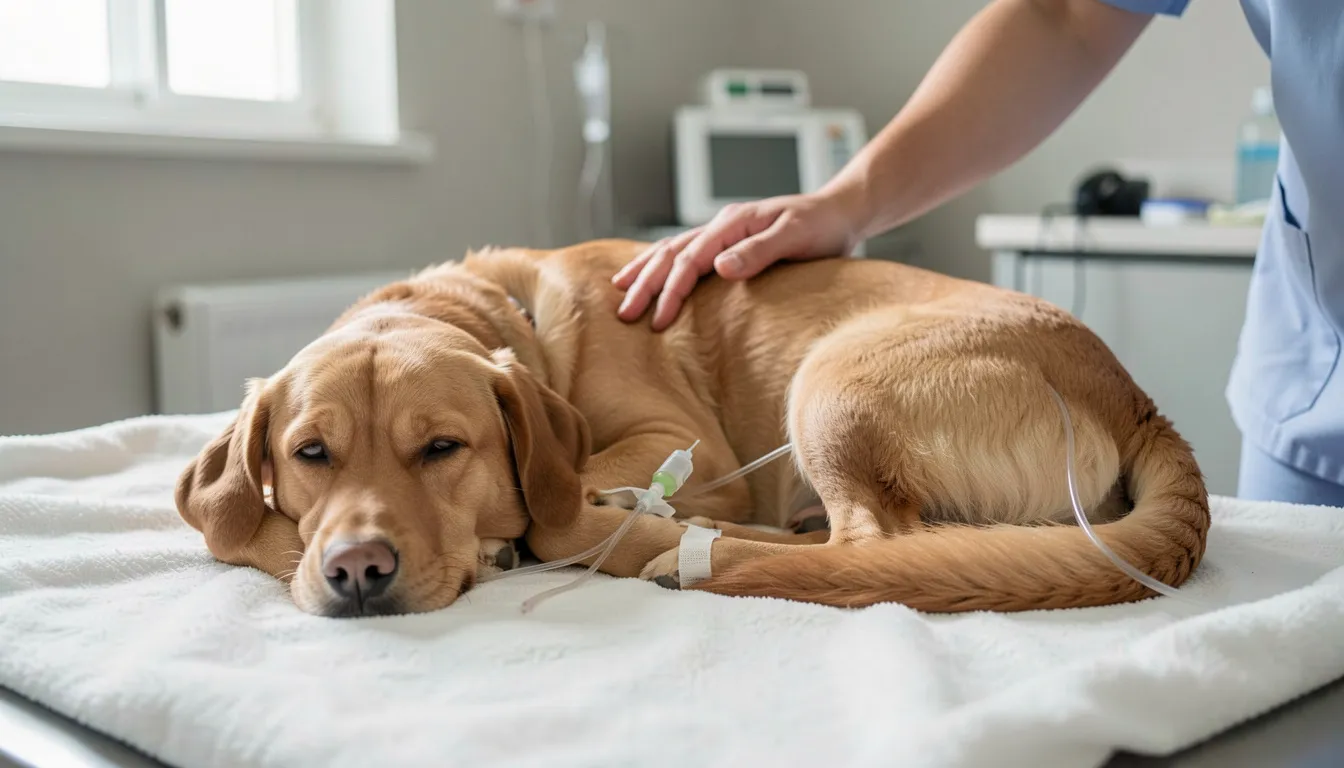
Because they block different receptors, the two drugs add up rather than compete. A dog with pancreatitis, a severe gastrointestinal infection, kidney disease or chemotherapy nausea may keep vomiting on one drug alone. Adding the second covers another pathway, and this combination is common in hospitals and specialist practices.
Combining them is a veterinary decision, not a home remedy. The vet will weigh the cause of the vomiting, hydration, any heart or liver disease, and other medications. If your dog is sent home on both, you will normally be told which one to give in the morning and how often to give the other.
Which one is better for car sickness?
For motion sickness, maropitant is usually the first choice. It is licensed for this use, given once ahead of the journey at a dose set by your vet, and it covers the inner-ear pathway that ondansetron handles poorly. The label for the motion-sickness dose limits how many consecutive days it can be used, so long trips need a plan made with the clinic.
Anti-vomiting drugs do not treat the fear and anticipation that many car-sick dogs develop. Short, positive practice drives and a stable, well-ventilated crate often make as much difference over time as any tablet.
What changes for a dog with the MDR1 mutation?
P-glycoprotein is the pump that keeps many drugs out of the brain, and it is defective in dogs carrying the MDR1 mutation. Both anti-nausea drugs interact with this pump to some degree, which is why some vets prefer the lower end of the dose range in MDR1 dogs and watch for heavier sedation, wobbliness or unusual drooling.
Neither drug is on the avoid list. The practical approach, detailed in our guide to anti-nausea medications in MDR1 dogs, is to tell every clinic the genotype before anything is dispensed, to let the vet lean toward the lower end of the dose range, and to report any unusual sleepiness. If you do not yet know your dog’s status, our MDR1 testing guide explains how to find out with a simple cheek swab.
When is vomiting an emergency rather than a prescription question?
An anti-vomiting drug hides a symptom; it does not fix the cause. Some situations need a vet the same day, and sometimes immediately:
- repeated vomiting with little or no ability to keep water down;
- blood in the vomit, or material that looks like coffee grounds;
- a swollen, tight belly with unproductive retching, especially in a deep-chested dog;
- vomiting in a young puppy, a senior dog or a dog with a known illness;
- a dog that may have eaten a toy, bone, sock or toxic substance;
- vomiting together with lethargy, pale gums or collapse.
Giving a leftover anti-nausea tablet in these situations can delay the diagnosis of a blockage or a poisoning. Our emergency drug reaction guide also lists what to bring to the clinic if a medication itself may be the problem.
Questions owners often ask
Can I give my dog Zofran from my own medicine cabinet? No. The dose for a dog is different, some human formulations contain ingredients that are not suitable, and vomiting has to be assessed first. Ondansetron should only be given on a veterinary prescription.
Why does the Cerenia injection seem to hurt my dog? Maropitant injections are known to sting. Clinics often reduce this by keeping the vial refrigerated before use. The discomfort is brief and does not mean anything went wrong.
How quickly do these drugs work? Injectable forms act within the hour. Tablets take a little longer, which is why a motion-sickness dose is given ahead of the journey rather than once the dog is already nauseous.
Quick reference: Cerenia and ondansetron in dogs
- Cerenia (maropitant): NK1 blocker, licensed for dogs, once daily, first choice for motion sickness.
- Ondansetron (Zofran): 5-HT3 blocker, human drug used off-label, given several times a day, strong for chemotherapy-type nausea.
- Together: common for vomiting that one drug alone does not control, always vet-directed.
- MDR1 dogs: neither is on the avoid list; tell the vet the genotype so the dose can be chosen with care.
- Red flags: blood, bloating, suspected foreign body or toxin, puppies and frail dogs need a vet first.