
The Decade When Vigilance Matters Most
If you’ve had your herding breed for eight or nine years and nothing has gone wrong, it’s easy to feel like MDR1 is a theoretical concern for other families - not yours. Your dog is healthy, you’ve made it this far, and the danger seems distant.
But senior dogs face a different medical landscape than young dogs. The conditions of old age - arthritis, cancer, heart disease, kidney disease, cognitive decline - require medications. More medications. Some dogs in their senior years take three, four, five different drugs in combination. Each prescription is another opportunity for a drug that interacts with MDR1 to enter the picture.
The veterinary term for this is polypharmacy, and it’s one of the most significant MDR1 risk factors for senior dogs. Individual drugs may be manageable. Combinations of drugs - where one drug inhibits P-glycoprotein, another is a substrate, and a third has its own pharmacological effects - create a much more complex safety calculation.
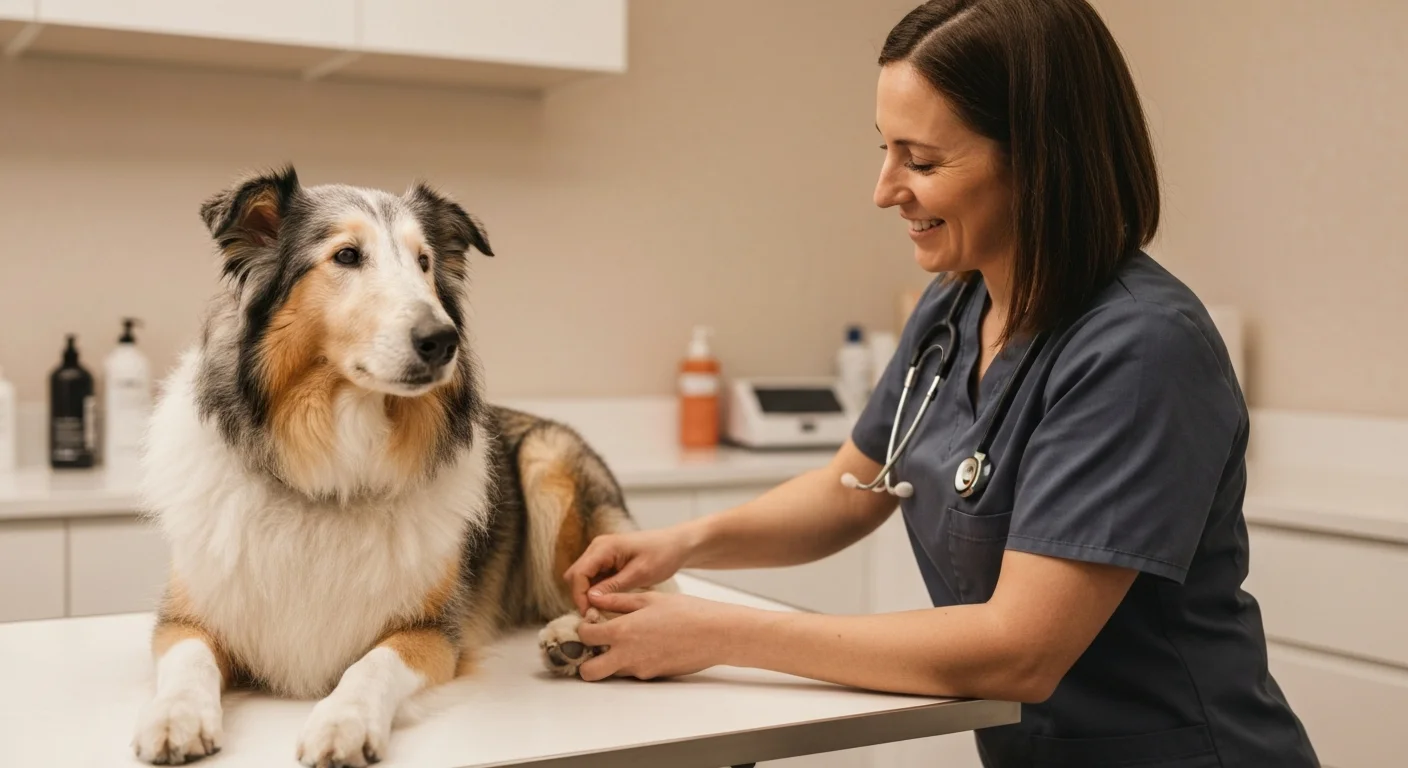
Why MDR1 Risk Increases with Age
The risk increases for several interconnected reasons:
More medications, more opportunities for interaction. A young dog might receive one or two medications in a year. A senior dog with arthritis and a heart condition might take daily NSAIDs, a cardiac medication, a joint supplement with drug-like properties, and occasional antibiotics or steroids. Any one of these might be managed easily. Together, they create interactions that even experienced vets can miss if MDR1 isn’t prominently in the file.
More procedures requiring sedation. Dental cleanings become more frequent. Mass removals, biopsies, and surgical interventions increase. Each procedure carries the anesthesia concerns described in our sedation and anesthesia guide. The more often sedation happens, the more times the MDR1 conversation needs to be had.
Kidney and liver function decline. Many senior dogs have reduced kidney or liver function, which affects how drugs are metabolized and eliminated. A drug that clears the system quickly in a young dog may linger longer in a senior dog with impaired organ function. In an MDR1-affected dog, impaired clearance combined with MDR1-related drug accumulation creates compounded risk.
Pain management complexity. Chronic pain is common in senior herding breeds - arthritis, degenerative joint disease, spinal issues. Managing pain in an MDR1-affected senior dog requires careful drug selection and dose management. The good news is that most of the commonly used pain medications are safe for MDR1-affected dogs; the challenge is managing them alongside other drugs.
Arthritis and Joint Pain: The Safe Options
Arthritis is among the most common conditions in senior herding breeds, and managing it requires long-term medication decisions. Most of the drug classes used for canine arthritis are not P-glycoprotein substrates:
NSAIDs (Rimadyl, Meloxicam, Galliprant): These are not P-glycoprotein substrates and are considered safe for MDR1-affected dogs at appropriate doses. Standard monitoring for gastrointestinal and kidney effects applies regardless of MDR1 status.
Gabapentin: Widely used for neuropathic and musculoskeletal pain. Not a P-glycoprotein substrate. Safe for MDR1-affected dogs.
Amantadine: Sometimes added to chronic pain protocols. Not a P-glycoprotein substrate at clinical doses.
Librela (Bedinvetmab): A newer injectable monoclonal antibody for osteoarthritis pain. Not a P-glycoprotein substrate. Represents a good option for senior dogs who don’t tolerate oral NSAIDs.
Adequan (Polysulfated Glycosaminoglycan): An injectable joint supplement with anti-inflammatory properties. Not an MDR1 concern.
For senior dogs with chronic pain, our safer alternatives guide includes a section specifically on pain management options across different drug classes.
Cardiac Medications and MDR1
Heart disease is common in aging dogs, and some cardiac medications interact with the MDR1/P-glycoprotein system:
Digoxin: This cardiac glycoside is a known P-glycoprotein substrate. In MDR1-affected dogs, digoxin may accumulate to higher levels than expected, potentially causing toxicity (nausea, arrhythmia, neurological symptoms) at doses that would be safe in a normal dog. If your senior herding breed needs digoxin, discuss MDR1 status with your cardiologist and request additional monitoring of digoxin blood levels.
Pimobendan (Vetmedin): Not a significant P-glycoprotein substrate. Generally safe for MDR1-affected dogs.
Atenolol, Diltiazem, and other antiarrhythmics: Primarily metabolized through liver pathways rather than P-glycoprotein. Standard use is generally appropriate, but notify your cardiologist of MDR1 status.
Furosemide (Lasix): Not a P-glycoprotein substrate. Safe for MDR1-affected dogs.
If your senior herding breed is referred to a veterinary cardiologist, make sure their team has the MDR1 test results. The MDR1/digoxin interaction in particular is well documented and should be factored into treatment decisions.
Cancer in Senior Dogs: A Special Note
The likelihood of cancer increases significantly in the senior years, and MDR1 considerations in oncology are addressed in depth in our separate cancer treatment and MDR1 guide. The short version: chemotherapy drugs like vincristine and doxorubicin are P-glycoprotein substrates, and dose modifications may be appropriate for MDR1-affected dogs. A veterinary oncologist should be aware of your dog’s MDR1 status before designing a treatment protocol.
Polypharmacy: The Drug Interaction Problem
When a senior dog is on multiple medications, a new layer of complexity appears: drug-drug interactions. Some drugs affect P-glycoprotein function independent of the MDR1 mutation. Specifically:
Some drugs inhibit P-glycoprotein, effectively making a dog behave more like an MDR1-affected dog even if they’re genetically normal/normal. Ketoconazole (an antifungal) is one example. If a dog is already MDR1-affected and also receives a P-glycoprotein inhibitor, the combined effect can be significant.
Some drugs induce P-glycoprotein, potentially reducing the brain exposure of other drugs.
This isn’t a complete list - drug interaction databases are complex and constantly updated. The point is that your senior dog’s complete medication list should be reviewed by someone with pharmacology expertise at least annually, and any new prescription should be checked against the existing list for interaction potential.
Ask your vet: “Can you review my dog’s complete medication list for interactions, specifically in the context of their MDR1 status?” If your general practice vet isn’t comfortable with this level of pharmacological review, a consultation with a veterinary internal medicine specialist or clinical pharmacologist is reasonable.
The Senior Dog Vet Visit: What to Track
For senior dogs, I recommend keeping a medication log - a simple document that lists every drug your dog takes, the dose, and the prescribing vet. Bring this to every appointment. It does several things:
- Makes it easy to catch drug interactions
- Ensures MDR1 information travels with the medication context
- Creates a record that’s useful if your dog ever needs emergency care
The vet visit checklist we’ve developed can be adapted for senior dog care, with extra sections for tracking ongoing medications and upcoming procedures.
The Long Relationship You’re Protecting
Your senior herding breed has probably been with you for a decade. The relationship is different from what it was when they were a puppy - deeper, more layered, shaped by years of shared experience. The medical care decisions you make in these final years carry enormous weight.
Vigilance about MDR1 in the senior years isn’t paranoia. It’s honoring the relationship by making sure that the increased medical complexity of old age doesn’t accidentally introduce a preventable harm. Every conversation with every vet, every new prescription reviewed, every hospitalization with MDR1 prominently in the chart - all of it is a form of care that your senior dog deserves.
They made it this far in part because you’ve been paying attention. Keep paying attention.
Senior dog care involves many individualized factors. This guide reflects general principles and community experience and does not substitute for individualized veterinary care. If your senior herding breed is managing multiple health conditions, consider consulting a veterinary internal medicine specialist in addition to your general practitioner. Contact us if you have questions or want to share your family’s experience with MDR1 in a senior dog.