
The Dog With Unknown History
Every year, millions of dogs enter shelters and rescues with no paperwork, no history, and no one who knows for certain what breeds are in their background. Some of them are obvious - the long-nosed Collie with the liquid eyes, the intense Australian Shepherd with the merle coat. Others are a mystery. The “Lab mix” that herds children at family gatherings. The “mutt” from the county shelter who does a textbook eye-stalk on the family cat. The dog whose breed is listed as “Shepherd mix” because someone thought the ears looked pointed.
Any of these dogs can carry the MDR1 mutation. And their owners may never know to ask, because nobody ever told them that MDR1 isn’t just a purebred-Collie problem.
I’ve heard from families with dogs that barely looked like herding breeds at all - Australian Shepherd mixes that looked like Labs, Collie crosses that looked like golden retrievers, Border Collie mixes that looked like border collie-sized nothing-in-particular. And those dogs had the mutation, and those dogs had reactions, and some of those dogs didn’t survive because nobody thought to check.
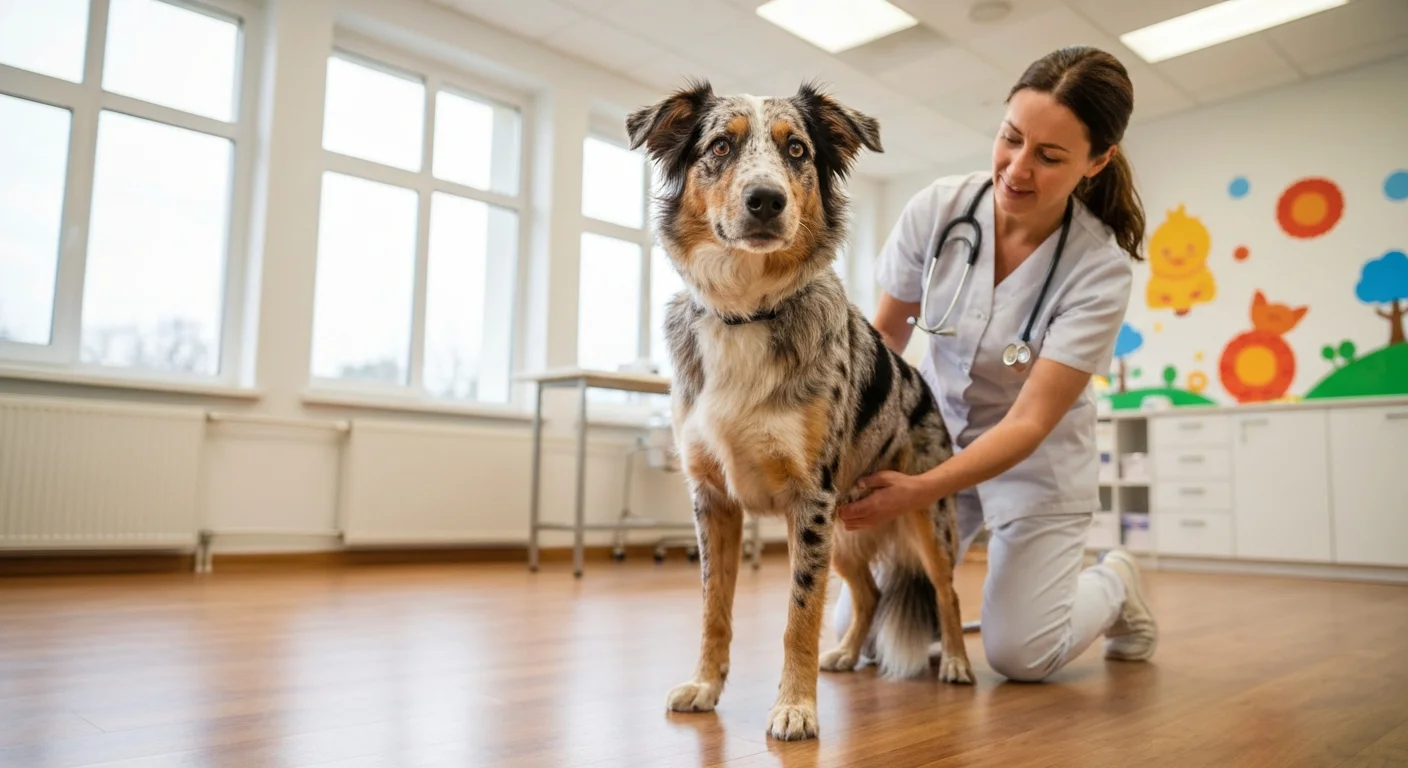
Which Breeds Carry MDR1
The mutation is present in a wide range of herding breeds and some non-herding breeds. For a complete breakdown with prevalence percentages, our guide to every breed that carries the MDR1 mutation covers the full list. The short version:
High prevalence (more than 25% affected):
- Rough and Smooth Collies (up to 75% carry at least one mutant copy)
- Shetland Sheepdogs (Shelties)
- Australian Shepherds
- Old English Sheepdogs
- Border Collies
- McNab Shepherds
- Silken Windhounds
- Longhaired Whippets
Moderate prevalence:
- German Shepherds (approximately 10%)
- English Shepherds
- Miniature American Shepherds
- White Swiss Shepherds
Lower but documented prevalence:
- Mixed breeds with any of the above in their ancestry
The mutation traces back to a single ancestral dog, thousands of years ago. Every dog that carries it is a descendant of that one animal. The mutation spread through the herding dog population because it doesn’t typically affect the dog’s health or working ability - only their response to specific medications.
How the Mutation Passes Through Mixes
If one parent carries MDR1, some puppies will inherit it. If that puppy later mates with another dog that also carries MDR1 - whether knowingly or not, whether the dogs are “mixed breeds” or “purebreds” - the mutation continues to spread.
In shelter populations and freely-breeding populations, it’s impossible to trace this history. That’s why “my dog doesn’t look like a Collie” is not a reliable argument for skipping the test.
The genetics are clear: any dog with herding breed ancestry may carry the MDR1 mutation. Full stop. And DNA-based breed identification tests frequently reveal herding breed ancestry in dogs that didn’t look like they had any.
The “My Dog Is Fine” Fallacy
One of the most common things I hear from owners of mixed breeds with herding ancestry: “He’s been given medications before and he was fine. He doesn’t need MDR1 testing.”
This is understandable, but it’s not good logic.
“Fine before” doesn’t mean “safe always.” Several factors determine whether a dog with the MDR1 mutation will have a visible reaction to a given drug:
- Which drug - not every drug is a P-glycoprotein substrate
- What dose - low doses may not trigger a visible reaction even in mutant/mutant dogs
- What the dog’s MDR1 genotype is - normal/mutant dogs have intermediate sensitivity and may tolerate drugs that would devastate a mutant/mutant dog
A dog that was given Ivermectin at heartworm prevention doses without a reaction isn’t “proven safe.” They were given a dose that is generally safe for even the most severely affected dogs. That says nothing about whether they’d survive a high-dose therapeutic Ivermectin treatment for mange.
Testing a Dog of Unknown Breed
This is where DNA testing becomes especially valuable for mixed breed owners. Products like Embark and Wisdom Panel can identify herding breed ancestry in a mixed breed dog and simultaneously test for MDR1. You get both pieces of information from one test.
If you discover your dog is a herding breed mix and test positive for MDR1 (normal/mutant or mutant/mutant), you have the same actionable information as any purebred Collie owner: you know what’s in your dog’s file, you know what to tell every vet, and you know what drugs to be cautious about.
Our MDR1 testing guide includes full details on Embark, Wisdom Panel, and the more targeted MDR1-specific test from Washington State University. If you already have breed identification information and just need the MDR1 result, the WSU test is the most affordable option at around $75.
Rescue Organizations and Their Responsibility
I’ve been running Golden Years Collie Rescue for years, and I think about this constantly. Our dogs are Collies - we know what we have. But many rescues take in mixed breed dogs whose background is genuinely unknown, and many of those organizations have never incorporated MDR1 testing into their protocols.
Every rescue that takes in herding breeds or herding mixes should be testing. Every. Single. Dog.
The argument against testing usually comes down to cost. Let me address that directly: a $75 MDR1 test costs less than two hours of emergency veterinary treatment. If a dog goes to a new home without MDR1 testing and has a reaction to a medication, that adopter will pay thousands of dollars - at minimum. And the dog may not survive. The $75 test isn’t a cost. It’s an investment that a rescue owes to the families adopting their dogs.
If you’ve adopted a dog from a rescue that didn’t test for MDR1, get the test yourself. If the rescue doesn’t know about MDR1, share our guide for understanding what vets often miss with them. Many rescues have changed their protocols after learning from families who brought this information to them.
How to Talk to Your Vet About a Mixed Breed
Some owners feel awkward bringing up MDR1 for a mixed breed dog. “What if the vet thinks I’m overreacting? What if they don’t take me seriously because my dog isn’t a purebred Collie?”
Say this: “My dog has DNA test results showing herding breed ancestry and MDR1 status. I’d like that information in the permanent file and I want it reviewed before any medication is prescribed.”
That’s it. Clear, factual, reasonable. A competent vet will respond to that the same way they’d respond to a purebred Collie owner saying the same thing - because the genetics don’t care about breed labels, and neither should the medical care.
If you don’t have DNA test results yet, you can say: “My dog may have herding breed ancestry. I want to discuss MDR1 testing before we proceed with any prescriptions.”
The vet visit checklist we developed works just as well for mixed breed dogs as for purebreds. The drug sensitivities are the same. The precautions are the same. The conversation is the same.
The Dog at the Shelter Right Now
There’s a dog at a shelter near you, right now, with herding breed ancestry that no one has identified. If they’re adopted without MDR1 testing and end up with mange, they may receive high-dose Ivermectin as a routine treatment. If they need deworming, the wrong product might be chosen. If they need surgery, acepromazine may be in the anesthesia protocol.
That dog has no voice in any of those decisions.
The best thing you can do - if you’re adopting, if you’re rescuing, if you have a mixed breed whose background is uncertain - is test. Do it early. Do it before the first vet visit if you can. And once you have the results, protect your dog with the same diligence you’d apply to any medical condition.
Because it is a medical condition. It’s not theoretical. It’s not hypothetical. It’s a genetic reality that lives in millions of dogs, most of whom have never been identified.
That’s a problem we can actually fix, one test at a time.
Questions about testing your mixed breed dog? Wondering if your rescue organization should add MDR1 to their intake protocols? Contact us. We’ve helped dozens of rescue organizations build MDR1 awareness into their programs, and we’re happy to help yours.