
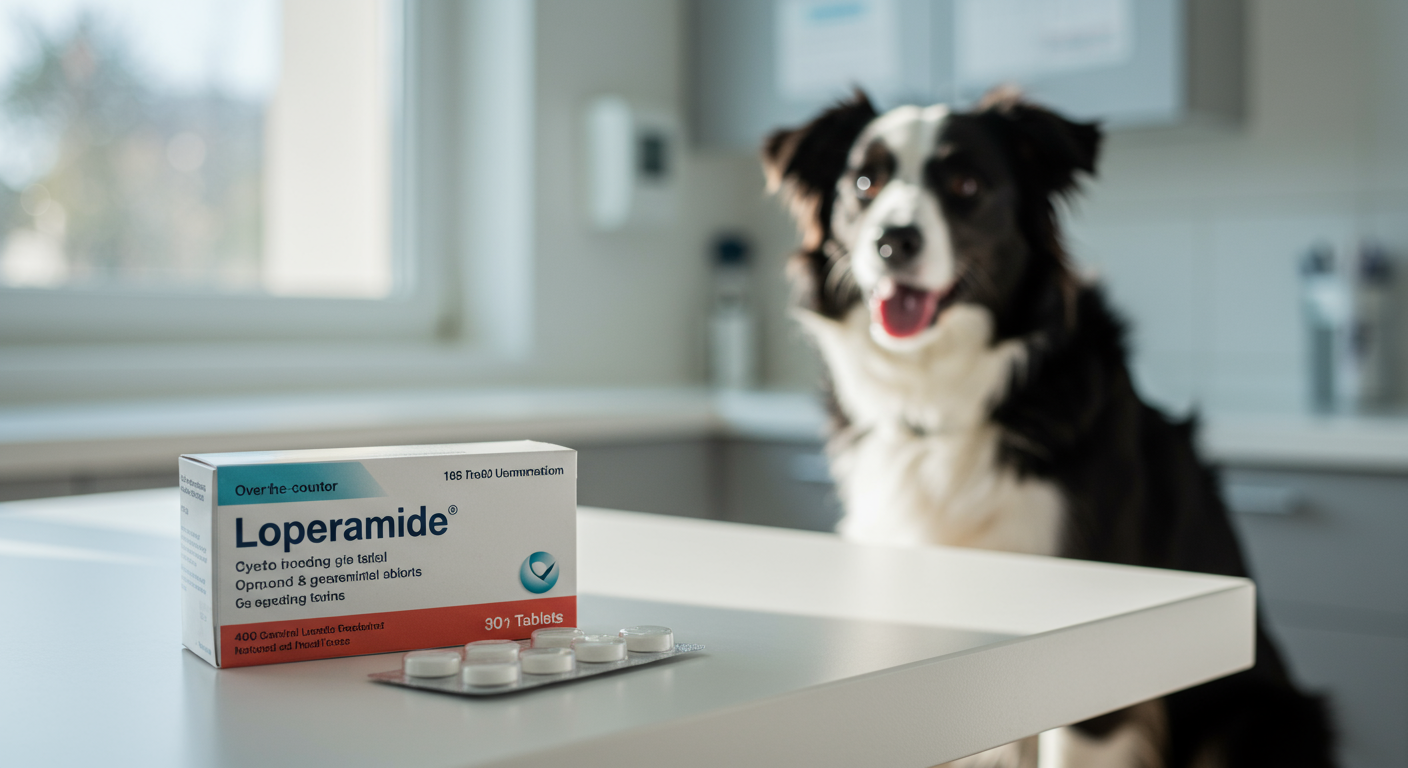
Loperamide is sold under the brand name Imodium. It is stocked in nearly every household medicine cabinet. It treats diarrhea quickly and inexpensively in humans, and for decades it was considered a reasonable over-the-counter option for dogs when owners needed to manage a sudden bout of soft stool. For herding breeds carrying the MDR1 mutation, loperamide is one of the most dangerous drugs available without a prescription. The exact mechanism that makes loperamide so safe in most dogs is the same mechanism that makes it potentially lethal in MDR1-positive dogs. Understanding that mechanism is the single most useful piece of safety knowledge a herding-breed family can carry.
What Loperamide Does in the Gut
Loperamide is a synthetic opioid. Unlike morphine, codeine, or other opioids used for pain management, loperamide is specifically designed to act primarily on the mu-opioid receptors in the gastrointestinal tract. When it binds those receptors, it slows intestinal motility, reduces fluid secretion, and firms up stool consistency. This local action is exactly what is needed to control diarrhea.
The key safety feature of loperamide is that it does not readily cross the blood-brain barrier in humans or in most dogs. Even though it is an opioid, it does not produce the central nervous system depression, respiratory depression, or analgesia associated with other opioids. It is, in the functional sense, a “gut-selective” opioid. That selectivity is what allows it to be sold over the counter.
Why P-Glycoprotein Matters
The reason loperamide stays out of the brain is P-glycoprotein. P-gp is an efflux transporter expressed heavily at the blood-brain barrier. It actively pumps loperamide out of brain tissue as fast as the drug tries to enter. With functional P-gp, brain concentrations of loperamide remain very low even after therapeutic doses, which is why the drug has no CNS effects in most dogs and humans.
Dogs with two copies of the MDR1 mutation have essentially no functional P-glycoprotein. Dogs with one copy have reduced function. In these dogs, loperamide crosses the blood-brain barrier unrestricted. Brain concentrations rise to the levels normally seen in the gut. The result is profound opioid effects in the central nervous system — severe sedation, respiratory depression, hypersalivation, disorientation, loss of coordination, and in severe cases coma and death.
Clinical Presentation of Loperamide Toxicity in MDR1 Dogs
Published case reports and veterinary toxicology databases document the typical timeline. Signs generally appear within 2 to 6 hours of ingestion. Initial findings include hypersalivation, ataxia (drunken gait), disorientation, and progressive sedation. If the dose is high or the dog is mutant-mutant, progression to deep stupor, unresponsiveness, profound respiratory depression, and hypothermia can occur within 8 to 12 hours. Without intervention, fatalities have been reported.
The doses that produce toxicity in MDR1 dogs are remarkably low. The standard loperamide dose considered safe for a 30-pound normal-genotype dog is approximately 2 mg. In an MDR1 mutant-mutant dog of the same weight, that same 2 mg dose can produce severe neurotoxicity. In other words, a single regular-strength Imodium tablet can be a toxic dose in an affected dog.
The Treatment
Loperamide toxicity in MDR1 dogs is treated with naloxone, the opioid reversal agent. Naloxone given intravenously reverses the respiratory depression, the sedation, and the hypothermia, usually within minutes. The challenge is that naloxone has a short half-life compared to loperamide, so multiple doses or a continuous infusion are often required until the loperamide has been metabolized and cleared. Supportive care — intravenous fluids, thermoregulation, respiratory monitoring — is essential during the reversal period.
If a family suspects loperamide ingestion in an MDR1 dog, the response should be immediate transport to an emergency veterinary hospital, ideally one with 24-hour critical care capability. Do not wait for signs to develop. Early decontamination with activated charcoal, before significant absorption has occurred, substantially reduces severity. Our emergency drug reaction guide covers the exact steps of the emergency protocol.
Safe Alternatives for Canine Diarrhea
The good news is that safer alternatives exist for managing canine diarrhea. Most cases of acute diarrhea in dogs resolve with dietary management alone — a 12 to 24 hour fast followed by bland diet (plain boiled chicken and rice, or a veterinary gastrointestinal diet) over several days. Probiotic support accelerates recovery in many cases. For dogs where pharmacologic intervention is warranted, safer options include:
- Metronidazole — antibiotic with anti-inflammatory properties. Not a P-gp substrate in the same clinically significant way.
- Tylosin — antibiotic often used for chronic idiopathic diarrhea in dogs.
- Kaolin-pectin — non-absorbed bowel protectant without systemic effects.
- Dietary management — bland diet, fiber supplementation, probiotic species such as Enterococcus faecium SF68.
These alternatives require veterinary involvement but are the correct path for any MDR1-positive dog with diarrhea requiring treatment. Our talking to your vet about MDR1 overview covers how to structure the conversation.
Prevention: The Home Medicine Cabinet Audit
Every household with a herding breed should perform a simple medicine cabinet audit. Any bottle of Imodium, any generic loperamide, and any combination anti-diarrheal (some contain loperamide) should be stored out of the dog’s reach — ideally in a latched cabinet out of any area the dog can access. The same audit should capture other P-gp substrates that present oral-ingestion risks, including certain anti-nausea medications, some antihistamines, and the ivermectin-containing heartworm preventives discussed in our heartworm prevention overview.
The Broader Lesson
Loperamide toxicity in MDR1 dogs is almost entirely preventable. The drug is widely available, the mechanism is well-understood, the testing is inexpensive, and the safer alternatives are accessible through any veterinarian. The emergency cases that still occur are almost always rooted in families not knowing that their dog carries MDR1 or not knowing that an over-the-counter anti-diarrheal could be dangerous. Genotype every herding breed. Keep loperamide out of reach in any household with a dog. When diarrhea occurs, call the veterinarian rather than reaching for the medicine cabinet. These three habits eliminate the vast majority of loperamide-related emergencies in herding breeds.
For families still learning the full picture of MDR1 safety, the complete overview of drugs beyond ivermectin that matter for herding breeds is worth reading in parallel with this article.