
A three-week routine for a puppy or a new dog works best when it is built on three things: rewards that arrive at the exact moment the behaviour happens, sessions kept short enough that the dog stays with you, and a recall that is practised every single day in easy conditions before it is ever tested in hard ones. In a household where a dog carries the MDR1 mutation, that same routine also has to hold space for medication safety, because the daily drill is not only about sits and stays. The plan below spreads the work over twenty-one days so nothing is crammed into one long weekend.
If you want a fuller walkthrough of the home side of this, the guide at three-week routine puppy covers room setup, rest zones, indoor barriers and short family sessions in more detail than a single article can.
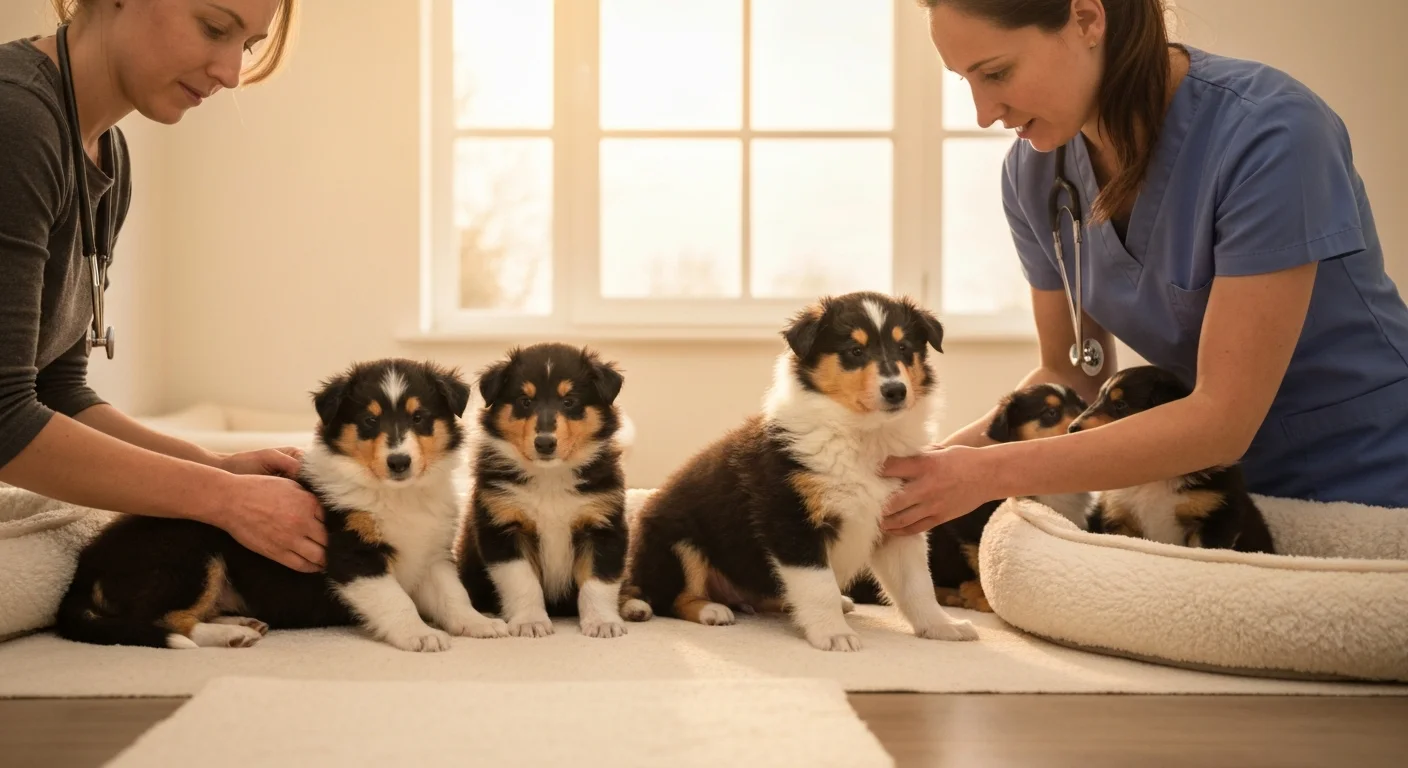
How can I build a three-week routine for a puppy or new dog at home?
Build it in three blocks of seven days, and give each block one job.
Week one is about the house itself. Pick one room for feeding, one bed or crate for sleeping, and one spot near the door for leashing up. Move anything chewable out of reach, set up a barrier so the dog cannot drift into the kitchen while you cook, and decide now where the dog goes when the doorbell rings. Keep visitors to a minimum. The only training goals this week are name recognition, a hand touch, and going to the bed on cue. Three to five minutes per session, four or five times a day, is plenty.
Week two adds movement. Practise walking on a loose leash inside the house and in the yard before you try the pavement. Add a sit before the food bowl goes down and a sit before the door opens. Start the recall in a hallway with no distractions. Keep the same feeding times and the same walk times every day, because a predictable day is what makes a new dog stop scanning for surprises.
Week three is about proofing. Take the recall into the yard, then to a quiet street. Add one mild distraction at a time, such as a person standing still twenty feet away. Practise greetings without jumping with a helper who turns away when paws leave the floor. By day twenty-one you should have a dog who knows where to rest, what the daily rhythm looks like, and what happens when you call.
If the dog is on medication, the routine has a fourth thread running through all three weeks. Pill times go on the same schedule as meals and walks, and the household knows which treats are safe. This is not a training topic, but it is a household topic, and a routine that ignores it will fall apart the first time someone hands the dog an unfamiliar biscuit.
When should I reward my dog during at-home training?
Reward inside the behaviour, not after it. The treat has to land while the dog is still doing the thing you want, or within about a second of it. If you call the dog and he turns and takes two steps toward you, the reward arrives on those two steps, not when he finally arrives at your feet. If you wait for the full picture, you are paying for whatever he did last.
Use a marker word or a click to buy yourself that second. Say the word the instant the behaviour happens, then deliver the food. The marker is a promise that payment is coming, and it lets you reward a sit that happened eight feet away without throwing a biscuit across the room.
Reward rate matters more than reward size. In the first week, pay almost every correct repetition. In week two, pay most of them. In week three, start paying for the better versions: the faster sit, the straighter recall, the looser leash. Keep the treats small, soft and easy to swallow, and count them as part of the day’s food so the dog does not gain weight during training.
One caution for MDR1 households: reward food is a medication decision. Some dogs with the mutation react to certain drugs, and the same care applies to anything the dog swallows, including chews and flavoured supplements. Ask your veterinarian which treats and chews are appropriate for your dog, and keep that list on the fridge where everyone can see it. Training is not the place to experiment.
How do I teach a reliable recall at home?
Reliable recall is built from hundreds of easy wins, not from one dramatic test in a park.
Start in a hallway or a small room. Say the dog’s name, then the cue, in a cheerful voice. When the dog comes, mark, pay, and release him back to whatever he was doing. That last part matters. If coming to you always ends the fun, the dog learns to hesitate. If coming to you sometimes leads to a game or a second treat, the dog starts offering the behaviour.
Practise in short bursts, five to ten repetitions, several times a day. Move to the yard when the hallway is boring. Add distance slowly, a few feet at a time. Add one distraction, then two. Never call the dog for something unpleasant, such as a bath or a nail trim, if you can avoid it; go and get him instead, and save the recall cue for good outcomes.
Use a long line outdoors until the recall is solid. A long line is not a punishment, it is a seatbelt. It lets the dog practise being right at a distance without rehearsing the wrong choice.
In a household with a dog on daily medication, the recall has a practical edge. A dog who comes when called is a dog you can bring inside quickly, settle on a mat, and dose without a chase. Practise a calm station, such as a mat or bed, and pair it with the pill routine so that the dog associates the mat with something neutral and predictable. Keep sessions short, keep the tone light, and let the veterinarian handle anything that involves drugs or dosing changes.
What does the daily drill look like once the routine is running?
A workable day looks like this. Morning: out to the yard, breakfast, one three-minute session on name and touch, then a rest in the crate or on the bed. Midday: a short walk on a loose leash, water, another rest. Afternoon: one recall session in the hallway or yard, one session on greetings or mat work. Evening: dinner, a chew if your veterinarian has approved it, a final short session, then settle.
Medication, if prescribed, sits at fixed points in that day, tied to meals so nobody forgets. Write the times on a whiteboard. Note any change in behaviour, appetite or coordination, and call the veterinarian rather than adjusting anything yourself.
Keep a simple log for the three weeks: what you practised, how many repetitions, what went well, what fell apart. Patterns show up fast. A dog who nails the recall on Tuesday and blows it on Thursday usually had a harder distraction on Thursday, not a personality change.
What should I do if the first three weeks go sideways?
Expect at least one bad day. A puppy who suddenly forgets the recall, a rescue dog who hides when the leash appears, a week of rain that kills every outdoor plan. None of that means the routine failed.
Shrink the difficulty. Go back to the hallway, back to five repetitions, back to rewarding every correct response. Rebuild the win, then move forward again. If the dog is showing fear, aggression signals, or a sudden change in behaviour, stop training and talk to your veterinarian first, because behaviour change can be medical.
If you are stuck on the household side, such as where to put barriers, how to handle children and dogs in the same room, or how to pick a qualified trainer in New Jersey, that is a separate skill set from medication safety, and it is worth getting help with it rather than guessing. The important thing is that the routine keeps running: same meals, same rests, same short sessions, same calm tone. Three weeks of boring consistency beats three weeks of heroic effort every time.